about wizard zines
wizard zines is a little different from other tech publications. Here’s my approach:
1. stick to fundamentals
wizard zines focuses on fundamentals: things that
haven’t changed much in the last 10 years and that probably won’t change much
in the next 10 either. That’s why there’s a zine about HTTP and not, say, the
Python requests module. HTTP/1.1 was defined in 1997! The basics haven’t
changed since 1997 because we need backwards compatibility on the web!
Fundamentals are important for 2 reasons:
- you can just learn them once. Because HTTP doesn’t change much, you can learn it now and stay confident in your knowledge. It’s still going to be the same in 5 years.
- everything based on them gets WAY EASIER. If you know HTTP, learning
curlor an AWS API orrequestsor whatever you need in your job gets SO MUCH EASIER. It’s easier to Google, easier to ask colleagues question, and easier to read documentation.
2. everyone needs to learn new things
One thing I think is unfortunate about programming culture is that “knowing fundamentals is really helpful!” can sometimes turn really gatekeeper-y (“oh, you don’t know how THING works? WELL YOU SHOULD!! IF YOU DON’T YOU AREN’T A REAL PROGRAMMER”). This is really unnecessary.
It’s SO NORMAL to make it 5 or 10 or 15 years in your programming career without learning something that seems “basic” about computing. We all need to learn new things to do our jobs well! And it’s BOTH:
- good to learn some of these “basic” things when you need them
- totally okay to not have learned it yet!
3. just the most important ideas
We all have a lot going on. Not everyone has time to read 400-page programming books!
Each of these zines is 20-28 pages. I spend hours on each page making sure that every single one explains one or two important ideas as succinctly and clearly as I possibly can.
4. avoid jargon
The internet is FULL of unclear explanations of programming concepts that almost seem designed to make you feel dumb. They’re full of jargon and phrased in a very formal way, kind of like “These are Very Important Serious Ideas and we need to use Complicated Words to explain them accurately”.
Instead, these zines explain “hard” ideas in simple, straightforward language. It’s important to keep the explanations accurate! It’s doesn’t help anyone if the explanation is simple and fun but untrue, and sometimes you do need to use more specific language! But I avoid jargon unless it’s absolutely necessary.
5. physical books are a little bit magical
All of these zines are PDFs, and you can read them on your computer. But they all come with versions that you can print on your home printer, and I really think there’s something magical about having a printed copy.
If you print it out, you can:
- leave it around the office for someone to discover!
- give it to a friend and print another one for yourself!
- read it in the park on a sunny day!
- rediscover it on your bookshelf on a Saturday morning a year later and flip through it again!
You can even colour it in, like this person did:
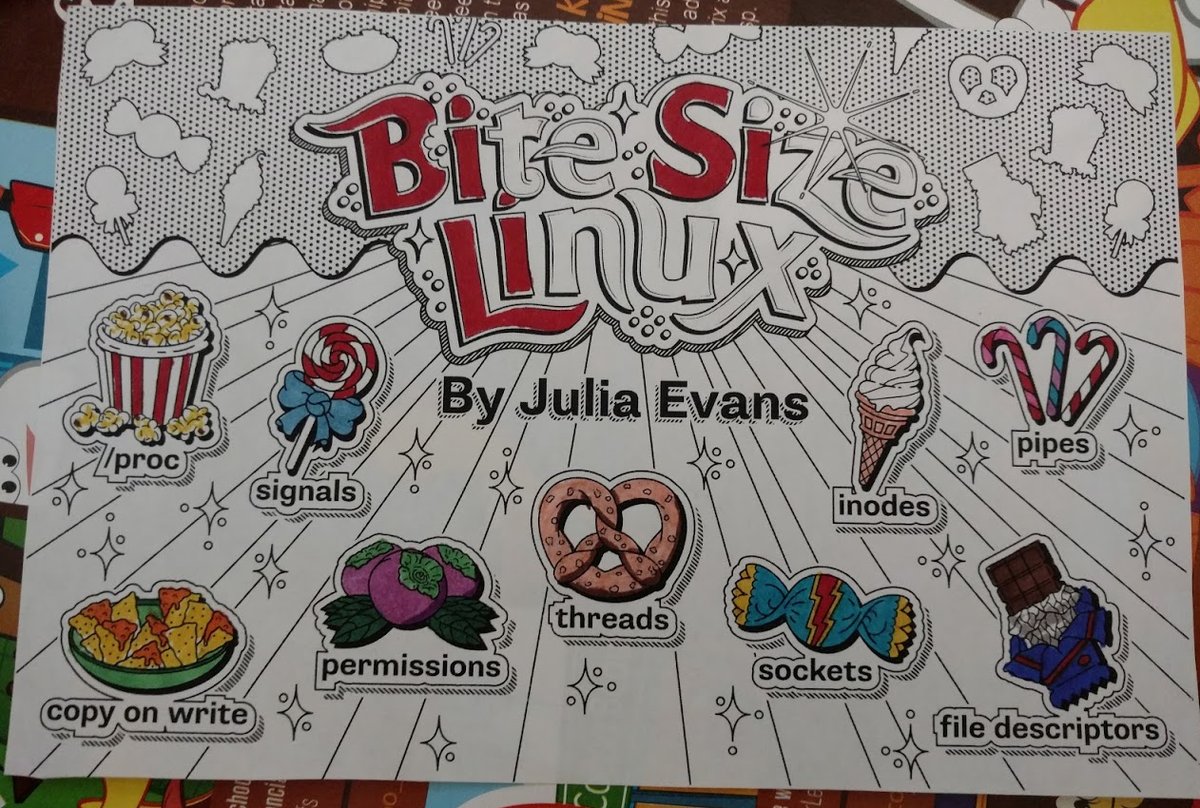
Every zine comes with a version designed to be printed on a black & white printer, in case you don’t have a colour printer. There are print directions here.